
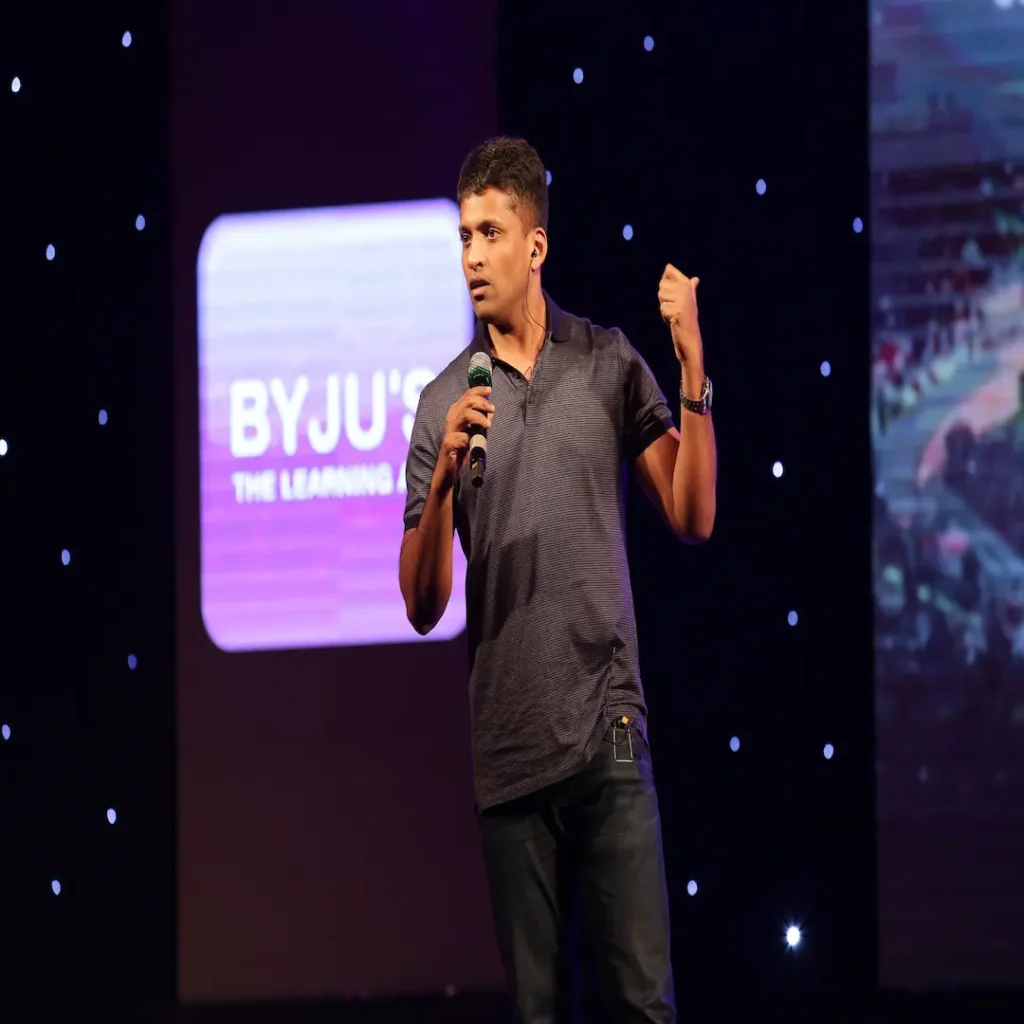
This Byju’s case study for MBA and BBA students looks at how India’s most valuable startup fell apart. In 2022, Byju’s was worth $22 billion. Two years later, its own founder called that number zero. Today, the company is stuck in a long insolvency process. Its most valuable asset is being fought over in court.
This case study covers growth strategy, mergers, financial governance, and crisis handling, all in one company. It breaks down what happened, why it happened, and what students can learn from it.
Quick Summary
- Company: Byju’s (Think & Learn Pvt Ltd), an Indian edtech company
- Core challenge: Fast, acquisition-led growth that outran the company’s controls and cash management
- Subject area: Strategic Management, Corporate Finance, Corporate Governance
- Key takeaway: A rising valuation is not the same as a healthy business. Byju’s grew faster than its systems could support.
Company and Industry Overview
This part of the Byju’s case study for MBA students traces the company’s origin story, from a single teacher to a $22 billion startup.
Byju Raveendran founded Byju’s in 2011 in Bengaluru. He was not a typical tech founder. Growing up in Kerala, he was the son of two teachers. A perfect percentile in India’s CAT exam put him on the map early. Tutoring students in person is where he got his start. That teaching style became the seed of the company.
The Byju’s app launched in 2015. It grew fast. Within three months, it crossed two million users. By 2018, it had 15 million users. That year, it became India’s first edtech unicorn, valued at $1 billion.
Then the pandemic hit. Schools shut overnight. Parents rushed to find alternatives. In March and April 2020 alone, Byju’s added 13.5 million new students. Big investors took notice. Sequoia, Tiger Global, BlackRock, and the Chan Zuckerberg Initiative all backed the company. Byju’s kept raising money. It also kept buying smaller competitors. By March 2022, the company had raised $800 million in a single round. Its valuation hit a peak of $22 billion. For a moment, it was one of the most valuable edtech firms in the world.
The Strategic Challenge
Here is the core problem in this case. Byju’s valuation grew faster than its ability to run the business behind it.
Between 2017 and 2021, Byju’s spent over $2.6 billion buying other companies. It bought Aakash Educational Services for close to $1 billion. It paid $300 million for WhiteHat Jr, and $600 million for Great Learning. Several smaller deals followed too. Each purchase added new students, products, or markets. On paper, this looked like empire-building.
In practice, the acquisitions were hard to integrate. Financial reporting fell behind. Costs kept rising. Revenue also grew, but not fast enough to keep pace with spending. In fiscal year 2022, the company lost ₹8,245 crore, or about $980 million. That happened even as revenue rose 118% that year. Growth and losses were rising together. Eventually, that combination caught up with the company.
Ask yourself this question as an MBA student: at what point does growth stop creating value, and start destroying it?
Business Model Breakdown
Byju’s business rested on three pillars:
- Subscriptions: Paid access to its core app, aimed at K-12 students preparing for school and competitive exams
- Acquired brands: Products like WhiteHat Jr for coding, Osmo for early learning games, and Epic for reading
- Offline coaching, through Aakash: A physical test-prep chain for medical and engineering entrance exams
Most money came from paid plans and course fees. Sales tactics were often pushy. Costs came from two places. First, the firm spent big to win new users. Second, it paid to run a large group of newly bought firms. That second cost is easy to miss. It is also what tripped Byju’s up.
Framework-Based Analysis: The Ansoff Matrix
Byju’s growth story fits well into the Ansoff Matrix. This is a classic tool. It shows how a firm chooses to grow. It works better here than a plain SWOT. Why? Byju’s story is really about how it grew. It’s not just about its strengths and weak spots.
| Ansoff Quadrant | Byju’s Strategy | Example |
| Market Penetration | Deepen its hold on existing K-12 students in India | Aggressive subscription renewals and upselling |
| Product Development | Add new learning formats for the same audience | WhiteHat Jr for coding, Osmo for early learning |
| Market Development | Take its product into new countries and age groups | “Future School” expansion into the US and UK |
| Diversification | Enter new segments entirely, through acquisition | Aakash for offline coaching, Great Learning for professional courses |
Notice something here. Byju’s chased all four strategies at once. It did this mostly through buying other firms, not slow, organic growth. That’s a bold move, even for a rich company. Raveendran later said some bets, like WhiteHat Jr, were mistakes. He called the Aakash deal one of the best moves the firm made. But chasing every strategy at once left little room for error. When a slowdown came, the company had no cushion left.
Financial Snapshot
(Data as of July 2026. Figures are compiled from public reporting, listed in the sources section below.)
| Milestone | Value | Date |
| First unicorn valuation | $1 billion | July 2017 |
| Valuation | $16.09 billion | March 2021 |
| Peak valuation | $22 billion | March 2022 |
| FY22 net loss | ₹8,245 crore (about $980 million) | Reported Sept 2023 |
| BlackRock markdown | Cut to $8.4 billion | March 2023 |
| Further BlackRock markdown | Cut to about $1 billion | Late 2024 |
| Founder-stated equity value | “Zero” | October 2024 |
Two more problems added to the pressure. In June 2023, Deloitte quit as the firm’s auditor. It pointed to long delays in the FY22 accounts. That same week, three board members also stepped down. They were linked to big investors: Sequoia, the Chan Zuckerberg Initiative, and Prosus. Byju’s disputed this at the time. The firm then hired BDO as its new auditor.
Outcome and Current Status
The trouble did not stay on the balance sheet. In February 2024, Byju’s US arm filed for bankruptcy. A few months later, in July 2024, an Indian court took up the parent firm’s case. This began formal insolvency. The trigger was small for a firm this size. It was one unpaid debt: ₹158 crore owed to India’s cricket board, the BCCI.
A long legal fight followed. Byju’s paid off the BCCI debt. Creditors first agreed to close the case. But India’s top court ruled otherwise. A creditor group had already formed. The case could not be dropped without its say. So the insolvency process went on.
Meanwhile, Aakash has quietly split from the Byju’s brand. It now runs under its own leaders. The Manipal Education and Medical Group has built a controlling stake there. It did this through new shares and debt deals. As of mid-2026, lenders are still talking through how to split Aakash’s ownership. Other Indian edtech firms have shown interest in parts of Byju’s remaining assets. In short, this story is not over yet.
Key Learnings for MBA and BBA Students
- Growth and value are not the same thing. A rising valuation can hide a business that is not getting healthier.
- Buying firms is not just about price. It’s easier to buy ten companies fast than to run them well together.
- Warning signs show up early. Auditor exits and late accounts often point to deeper trouble.
- Small debts can cause big legal risk. One unpaid bill of ₹158 crore was enough to start insolvency for a $22 billion firm.
- A demand spike is not a business model. Byju’s treated a pandemic-era surge as a lasting trend, and spent like it would last.
- Founders still need checks and balances. Too much power in one person’s hands made it harder to fix problems in time.
Discussion Questions
- If you were advising Byju’s board in 2021, at the peak of its buying spree, what risk would you have flagged first? How would you have managed it?
- Look at the Ansoff Matrix above. Which of Byju’s four growth strategies seems least justified to you, and why?
- How should investors balance founder passion against early governance warning signs, like delayed audits?
- What would a healthier pace of acquisitions have looked like for Byju’s between 2019 and 2022?
- Compare Byju’s collapse to another Indian startup that faced financial distress. What patterns repeat? What feels genuinely different?
Frequently Asked Questions
What is the Byju’s case study about?
It looks at how Byju’s grew from a small tutoring business into a $22 billion firm. It grew fast, mostly by buying other companies. The case also shows why that same choice helped cause its later collapse.
What is Byju’s valuation today?
The founder has said the firm’s value is now zero. This came after big investors, including BlackRock, cut their estimates sharply.
Is Byju’s still operating?
Think & Learn, the parent firm, is still in a formal insolvency process in India. Aakash, its old test-prep arm, now runs on its own.
Which business framework best explains Byju’s strategy?
The Ansoff Matrix fits well. Byju’s chased four things at once: deeper India sales, new products, new markets, and new segments through buying other firms.
Related Case Studies
Paytm: Navigating an RBI Regulatory Crisis — a Finance and Compliance Case
Sources
- TechCrunch — Byju’s auditor and board resignations, June 2023
- Business Standard — Supreme Court and Byju’s insolvency coverage, Nov 2025
- Wikipedia — Byju’s company history and acquisitions timeline
- Forbes India — Byju’s valuation and IPO timeline
- Canvas Business Model — Byju’s financial history summary
- The Tribune — Byju Raveendran interview on acquisitions
- Inc42 — Byju’s lenders and Aakash settlement talks, June 2026
- Outlook Business — Aakash rights issue and NCLAT proceedings, February 2026
- LawChakra — Supreme Court proceedings on Aakash stake, February 2026
Pingback: Paytm Case Study: RBI Crackdown to License Collapse